

Startup Founder Anger: Recognize it and Lead Through It
“If I feel angry, I must be failing.”
You may have heard this being said.
Startup founder anger does not discriminate on whether you’re a solo founder or part of a small team.
Neither does it care whether you’ve successfully launched your product or not.
However, anger in startups is inevitable, given its high-pressure nature.
Frustration builds, bit by bit, due to daily infractions.
Or it can show up suddenly.
Keep reading to recognize and understand the signs of anger, how it works, and ways to manage it.
But first, let’s look at what anger is.
It is a primary emotion.
It’s normal to experience anger.
If it’s left unmanaged, it can impact you, your relationships, and your business.
As founders are very invested in their businesses, the response to anger can feel more acute and intense- maybe personal, at times.
It can be triggered in these scenarios, for a start:
- Co-founder conflict
- Customer complaints
- Funding rejections
- Team disputes
- Delayed launches
- Unexpected pivots
Anger doesn’t always look like shouting or throwing things. Often, it’s subtler.
It has two faces – outward and inward.
What do the faces look like?
Let’s take a look.

Startup Founder Anger
Startup Founder Anger and its Outward Face
Picture this:
It’s Thursday afternoon.
You’ve made dinner plans with friends.
It’s taken months to coordinate this with everyone’s busy schedules.
But just before you log off, your co-founder (could be investor or key client) throws a last-minute demand your way.
It’s urgent. And it’s due tomorrow.
You smile politely on the call. But as soon as it ends, you slam your laptop shut.
Flinging yourself off your chair, you pace around the room, cursing the whole time.
You know you’l be working late..again.
Yet another plan has been cancelled.
Your hand reaches up to rub your temples as you feel a familiar headache.
There’s tension in your shoulders.
Your jaw clenches.
Then, you pour yourself a drink. Not because you want one, but to calm down.
This is outward anger.
It’s loud and it’s physical – and it’s a startup stress response.
Startup founder anger can be expressed through yelling, snapping, and passive-aggression.
It’s not always explosive.

Startup Founder Anger
The Inward Face of Startup Founder Anger
Now, Picture this:
Another failed funding round. This one came with very poor investor feedback.
You’re disappointed.
But more than that, you’re furious…at yourself.
You replay the conversations in your head, over and over again.
I should have anticipated X.
I should have focused more on Y.
Your silent beratings to yourself make you feel sick.
You want to cancel your weekend plans.
You don’t feel like you deserve the break anyway.
This is inward anger.
It’s less obvious.
It’s internalized. And it creates self-blame, shame and emotional shutdown.
As a busy startup founder, there’s little space to regularly process these emotions.
Here are some simple ways to get you started.

Startup Founder Anger
3 Practical Strategies for a Startup Founder to Manage Frustration
- Notice Your Physical Cues
Start noticing physical cues of startup founder anger. These are early warning signs that your body is preparing for “fight or flight.”
Do you feel:
- Muscle tension?
- Clenched jaws?
- Irritable for no apparent reason?
- Dry mouth
- Stomach aches?
2. Press Pause
While it can feel counterintuitive, it’s powerful.
It breaks the automatic stress response and gives your rational brain time to catch up.
To press pause on anger, you can:
- Splash cold water on your face
- Take a few deep breaths as you are
- Get outside for a few minutes for a change of environment
Startup Founder Anger
3. Use a Cool-Down Strategy
There is no one-size-fits-all when it comes to cool-down strategies.
Every founder has a different one depending on their circumstances.
It’s helpful to have a few to use in different situations.
Experiment to find what calms your nervous system before you react.
Some are:
- Repeating a calming phrase
- Box breathing (4-4-4-4 rhythm)
- Talking to a trusted friend or coach
What’s Beaneath Anger: The Iceberg Analogy
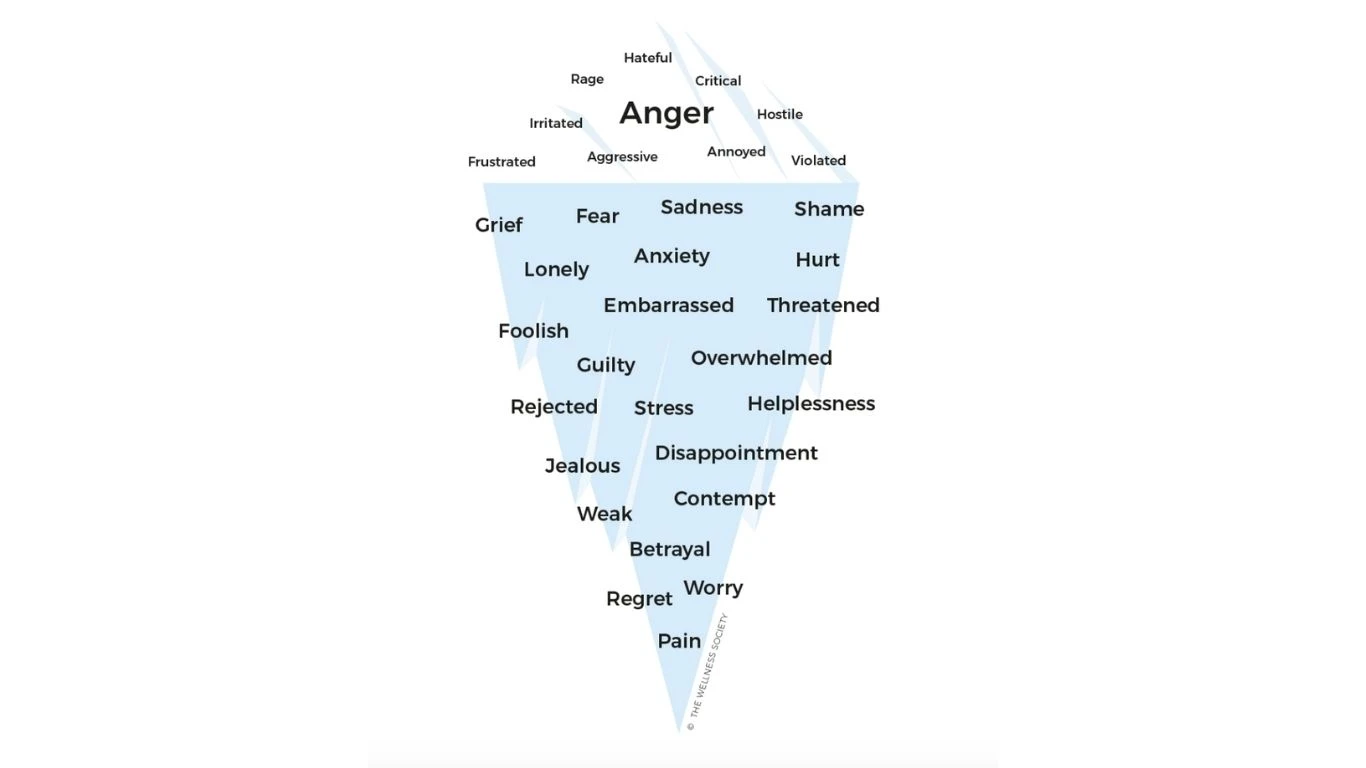
The Gottman Institute calls anger an “iceberg emotion.”
What others (and sometimes we) see – irritation, sarcasm, rage – is just the tip.
Under the surface, anger often masks:
- Disappointment
- Fear
- Hurt
- Stress or exhaustion
- Powerlessness
Exploring what lies beneath your “anger iceberg” helps shift from reaction to reflection.
This is where true emotional intelligence starts.
Startup Founder Anger
What Neuroscience Tells Us
Anger activates the amygdala—the part of the brain responsible for fear and survival.
When the amygdala is triggered, it floods the body with adrenaline
Adrenaline activates our muscles and prepares us to fight or flee.
Additionally, neuroscientist Richard Davidson found that:
- People with more active left prefrontal cortexes tend to be more resilient, calm, and hopeful.
- Those with more active right prefrontal cortexes are more prone to pessimism, anxiety, and anger.
And the good news?
Mindfulness and meditation can help shift brain activity from the reactive right side to the calmer left.
You can literally rewire your emotional responses.

Startup Founder Anger
How Frustration Impacts You & Your Business Long Term
If left unchecked, anger can damage:
- Your physical health – poor sleep, weakened immune system, and an increased risk of heart disease
- Decision-making – reactivity can result in making snap decisions, and obstruct clarity
- Mental well-being – higher risk of anxiety, depression, and burnout
- Relationship impact – conflicts with co-founder, the team, and potentially investors, strained dynamics with family and friends
However, it’s not all doom and gloom. There’s a twist.
Resentment isn’t bad in and of itself.
When channelled constructively, anger can:
- Drive you to speak up for what’s right
- Signal when a boundary has been crossed
- Motivate action and change

Startup Founder Anger
In Conclusion: Reflection Points
Through increased awareness, anger can be managed quickly and effectively so it doesn’t run the show.
In fact, anger can be channelled to your & your company’s benefit.
The key is learning to respond rather than react.
To increase self-awareness, consider journaling on the following:
- When was the last time I felt really angry? What was beneath that?
- Do I tend to express or suppress anger?
- What’s one thing that reliably helps me calm down?
- How does anger impact my leadership?
- What would it look like to express anger in a healthy, respectful way?
Next Steps:
If you would like to explore what’s underneath your anger and how to manage it – get in touch. I offer a 20-minute clarity call where we can connect and explore your requirements. Book here
FAQs
1. Is anger always a bad thing for founders?
No. Anger is a primary emotion. It’s a signal that something feels unfair, unsafe, or misaligned. It becomes harmful only when unmanaged or expressed destructively. Managed anger can clarify boundaries and drive meaningful action.
2. How can I tell if I’m experiencing anger rather than stress or frustration?
Anger often shows up physically first: clenched jaws, muscle tension, shallow breathing, or an urge to control. Stress can feel more diffuse or fatigue-based. When irritation turns personal or moral (“This shouldn’t happen”), it’s likely anger.
3. What’s the difference between expressing and suppressing anger?
Expression means acknowledging anger and communicating it constructively (“I’m frustrated because X”). Suppression means ignoring or internalizing it (“I shouldn’t feel this”). Both extremes are unhelpful. Healthy regulation lies in naming the feeling, pausing, and choosing a response.
4. How does anger affect leadership and team trust?
Unregulated anger creates unpredictability and fear, eroding psychological safety. Teams start avoiding honest feedback or conflict. Conversely, leaders who handle anger with transparency (“I need a few minutes to cool off before discussing this”) model emotional maturity and build trust.
5. What are practical techniques to calm down when I feel triggered?
Start with a brief physiological reset: deep breathing, splashing cold water, or stepping outside. Then use a mental reset: label the emotion (“I’m angry, not overwhelmed”) and identify the trigger. Over time, this rewires neural pathways for emotional regulation.
6. Can anger ever be useful in business decisions?
Yes, but only if it’s channelled, not acted out. Anger often signals that a value or boundary is being violated. Reflect before reacting: What does this emotion want to protect? Used this way, anger becomes a compass for integrity and assertive decision-making.
No. Anger is a primary emotion. It’s a signal that something feels unfair, unsafe, or misaligned. It becomes harmful only when unmanaged or expressed destructively. Managed anger can clarify boundaries and drive meaningful action.
Anger often shows up physically first: clenched jaws, muscle tension, shallow breathing, or an urge to control. Stress can feel more diffuse or fatigue-based. When irritation turns personal or moral (“This shouldn’t happen”), it’s likely anger.
Expression means acknowledging anger and communicating it constructively (“I’m frustrated because X”). Suppression means ignoring or internalizing it (“I shouldn’t feel this”). Both extremes are unhelpful. Healthy regulation lies in naming the feeling, pausing, and choosing a response.
Unregulated anger creates unpredictability and fear, eroding psychological safety. Teams start avoiding honest feedback or conflict. Conversely, leaders who handle anger with transparency (“I need a few minutes to cool off before discussing this”) model emotional maturity and build trust.
Start with a brief physiological reset: deep breathing, splashing cold water, or stepping outside. Then use a mental reset: label the emotion (“I’m angry, not overwhelmed”) and identify the trigger. Over time, this rewires neural pathways for emotional regulation.
Yes, but only if it’s channelled, not acted out. Anger often signals that a value or boundary is being violated. Reflect before reacting: What does this emotion want to protect? Used this way, anger becomes a compass for integrity and assertive decision-making.